
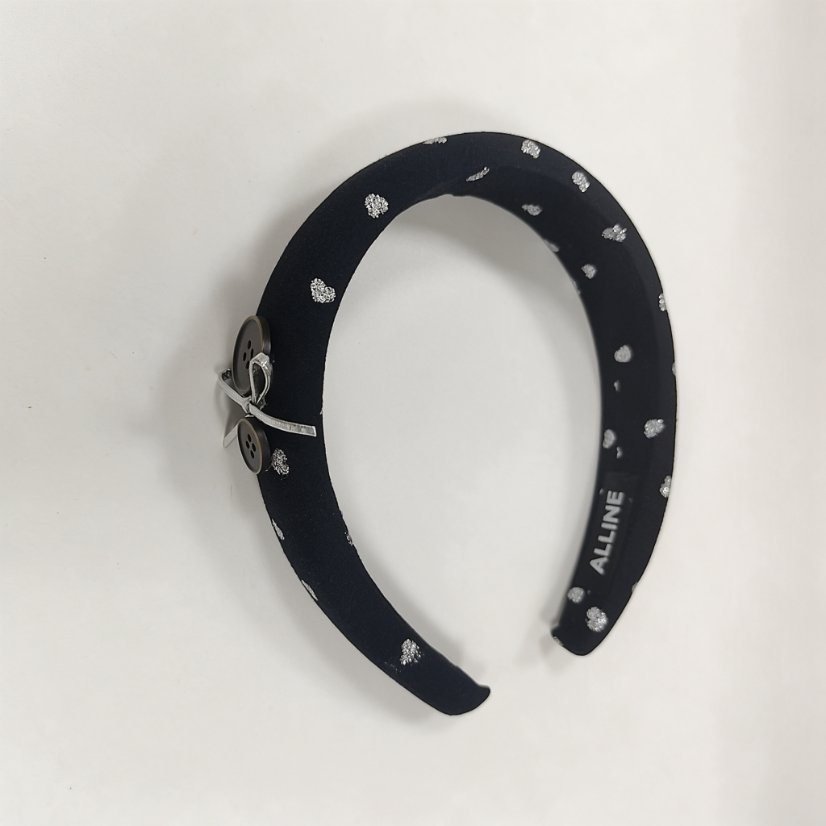
Headband Samples: Review Inner Face and End Finish
For a fabric-covered headband, request separate views of the inner face and both ends before approving the sample’s appearance. Haiyan’s Black Fabric Headband 32 catalogue photograph identifies the selected design, but the buying team should ask which visible finish details belong to the offered version and preserve the supplier’s answer with the sample.
Black Fabric Headband 32 catalogue appearance. Request identified inner-face and end views for the actual offered sample; this photograph does not establish hidden construction or a confirmed finish specification.
Give the inner face its own approval view
An attractive outer photograph can answer which headband a buyer selected while leaving the inside presentation unclear. The official Black Fabric Headband 32 image shows an open curved band with decorative details. A purchasing enquiry should turn that reference into a specific request: show the inner face and the two ends of the offered sample, not only the outward-facing design.
Ask the supplier to identify the sample being photographed and the quotation version it represents. Keep the complete product name beside that request. The useful deliverable is a set of views that lets the buying team discuss visible finish areas consistently. It is not necessary to infer the construction beneath the covering in order to ask a clear appearance question.
Separate the two ends from the central curve
Use simple location labels on a reference image: inner curve, first end and second end. For each area, ask the supplier to show the intended visible covering and any visible joining line. Request a close view where a detail is hidden by the catalogue angle. If the ends are presented differently, ask whether that difference belongs to the offered design or needs clarification before approval.
Review area
Supplier view or answer
Buyer decision
Inner curve
A clear view of the sample’s inward-facing surface
Identify the intended visible presentation
First end
Close view of the terminal area and visible covering
Approve or query the shown finish
Second end
Equivalent view from the same sample
Confirm whether both ends follow the proposal
Visible joining line
Its location on the proposed sample, if present
Record the accepted location or requested change
Decorative area
Inner-side view corresponding to the attached detail
Resolve any appearance question separately
Gray Fabric Scrunchie 28 is a different catalogue product. Its gathered ring shape is a comparison reference, not a headband component or an agreed headband finish.
Ask for a consistent sample presentation
A practical photograph set can include the whole headband, the inward-facing curve and a closer view of each end. Ask for those images to come from the same identified sample. This avoids reviewing a close-up from an earlier proposal alongside the overall view of a revised item. Include enough of the surrounding band in a detail image to make its location understandable.
When a surface is difficult to see, ask for another angle rather than treating shadow or glare as a product characteristic. Keep the supplier’s explanation beside the relevant view. A brief annotation such as proposed joining-line location can be more useful than a general request for better quality. It tells the supplier which appearance decision remains open and gives the buyer a specific answer to review.
Agree appearance criteria before receiving goods
Before the purchase is confirmed, list the visible details that matter to the project. These might include the agreed appearance of the covered ends, the location of a visible joining line, or the presentation of the inner surface beside a decorative area. Ask the supplier whether the proposed sample is the reference for those details. Any agreed acceptance criteria should be written clearly enough for the receiving team to use.
Keep those criteria proportionate to the actual purchasing need. A catalogue image supplies no numeric tolerance for a joining line or another finish detail. If a precise limit matters, request a proposal and agree how it will be checked. Do not create an unspoken rejection rule after the goods arrive. A short, acknowledged appearance schedule is easier to apply than several informal comments scattered across messages.
Identify one sample and the quotation version it represents.
Request inner-curve and separate end views.
Mark the specific visible area behind each question.
Retain approved references and unresolved points separately.
Pink Fabric Scrunchie 27 is another separate accessory. Its edging and attached detail do not describe the parts supplied with Headband 32.
Keep accessory forms and other specifications separate
The Gray Fabric Scrunchie 28 and Pink Fabric Scrunchie 27 are different catalogue products. Their gathered fabric rings help illustrate why an appearance checklist should follow the selected product form. A question about the terminal finish of an open headband cannot be answered by a photograph of a scrunchie’s contrasting edge.
For buyers comparing wholesale fabric hair accessories, keep the headband finish review distinct from material declarations and performance requirements. The listed material wording for Headband 32 is a supplier description; a photographic review does not verify its composition, comfort or strength. Ordinary visible lettering and decoration also provide no basis for claiming a brand relationship. This review concerns the visible presentation proposed for the identified sample.
If a later proposal changes a visible end detail or the inner-face presentation, ask the supplier to identify the revision and provide the relevant replacement view. Preserve the earlier reference so that the team can understand which decision changed. That gives purchasing and receiving a usable appearance baseline without extending a photograph into promises it does not establish.
Buyer questions
Is the main catalogue image enough for finish approval?
It identifies the design, but request any inner-face or end view needed to answer the specific appearance questions in the order.
Should the two ends be approved together?
Ask for both ends from the same identified sample. Confirm whether the shown treatment follows one agreed proposal or requires a separate explanation.
Does an accepted appearance view prove comfort or durability?
It records an appearance decision. Keep any performance requirement and its supporting evidence in a separate, applicable part of the purchasing discussion.
Send the selected catalogue reference and marked finish questions through Haiyan’s contact page. The blog offers additional accessory context; the supplier’s proposed sample and agreed views should settle this order’s finish details.
wholesale fabric hair accessoriesheadband sample reviewinner face and end finish